China's home-grown drone, the Rainbow 5, has successfully completed its maiden flight in Northwest China's Gansu province, China Central Television (CCTV) reported.
The drone, twice the size of other unmanned aerial vehicles developed by China in the past, also took the lead internationally, CCTV said.
Wednesday
Anggaran Pertahanan di 2016 Dikurangi, Menhan: Ini Saja Sudah Kurang
Jakarta - Anggaran untuk Kementerian Pertahanan pada tahun 2016 direncanakan sebesar Rp 95.91 triliun atau turun sekitar Rp 7 triliun dari tahun 2015. Menhan Ryamizard Ryacudu pun merasa keberatan.
"Ini saja sudah kurang, masak dikurangi, gimana ceritanya?," ujar Menhan Ryamizard Ryacudu di Batalyon Infanteri Mekanis 201/Jaya Yudha di Cijantung, Jakarta Timur, Rabu (2/9/2015).
Namun menurut Menhan, pengurangan tersebut tak akan berdampak pada pengadaan alutsista. Pengadaan tersebut menurutnya sudah termasuk dalam batas tertinggi anggaran (pagu).
"Ini saja sudah kurang, masak dikurangi, gimana ceritanya?," ujar Menhan Ryamizard Ryacudu di Batalyon Infanteri Mekanis 201/Jaya Yudha di Cijantung, Jakarta Timur, Rabu (2/9/2015).
Namun menurut Menhan, pengurangan tersebut tak akan berdampak pada pengadaan alutsista. Pengadaan tersebut menurutnya sudah termasuk dalam batas tertinggi anggaran (pagu).
Sunday
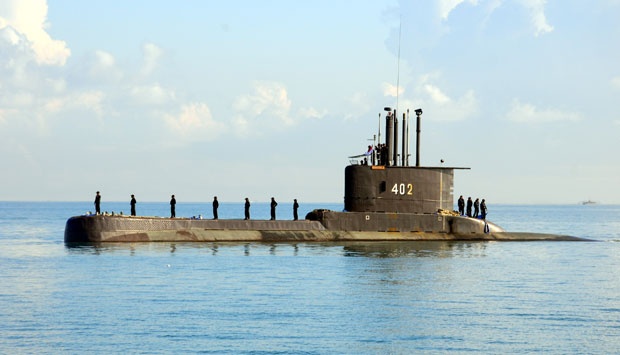
Rusia Tawarkan 10 Kapal Selam
TEMPO.CO, Jakarta - Menteri Pertahanan Purnomo Yusgiantoro menyatakan, pemerintah mendapat tawaran untuk dapat membeli sekitar 10 unit kapal selam dari Rusia. Jumlah ini di luar rencana pembelian tiga unit kapal selam dari Korea Selatan yang akan datang pada 2014.
"Kapal selam dari Rusia sudah ada. Mereka membuka kesempatan karena kedekatan dengan kita," kata Purnomo saat ditemui di Istana Merdeka, Sabtu, 17 Agustus 2013.
Saturday
EXOCET
MBDA’s family of EXOCET missiles comprises a range of easy to use, stand-off “fire and forget” stealthy missiles with skimming flight for engaging high value naval targets with the flexibility to be fired from all maritime platforms – surface ships, submarines, fixed wing aircraft, helicopters and coastal batteries.
EXOCET, in production since 1972, was the West’s first long range anti-ship missile with "fire and forget" and skimming flight capabilities.
EXOCET is a complete family of all-weather heavy anti-ship missiles suitable for all types of carriers. It is available in several versions:
• surface to surface (MM) for ships
• air-to-sea (AM) for aircraft and helicopters
• submarine-surface (SM) for submerged submarines
• land-sea (BC) for coastal batteries.
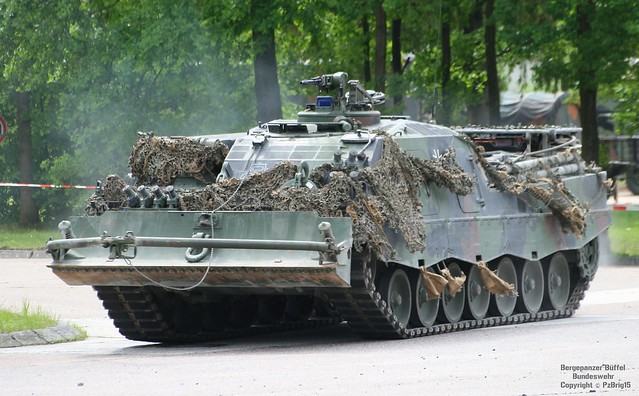
Buffel - Armored Recovery Vehicle
The Bergepanzer 3 Buffel (Buffalo) armored recovery vehicle was developed by Rheinmetall. It is based on the Leopard 2 chassis and is fitted with powerful recovery system. With introduction of the Leopard 2 main battle tank in 1979 it appeared that the previous Bergepanzer 2A2, based on the Leopard 1 MBT chassis, was not powerful enough to support the new main battle tank. A development program for a new armored recovery vehicle was launched. The first prototypes of the Bergepanzer 3 were completed in 1988. Deliveries of the new ARV commenced in the early 90s.
The Buffel ARV is currently in service with Germany, Canada, Greece, the Netherlands, Singapore, Spain, Sweden and Switzerland. Components of the Buffel, like the crane, dozer blade are installed on the South Korean K1 ARV, French Leclerc DNG armored recovery vehicles.
The Bergepanzer 3 is fitted with a crane, winch and front-mounted dozer. The main mission of the Buffel is recovery of damaged, overturned and swamped main battle tanks and other tracked vehicles. It also provides maintenance service or tows them to maintenance units. Other tasks of the Buffel include general dozing and obstacle removal.
The Buffel has a large crane installed on the rotary platform, which is capable of lifting 30 000 kg. The crane can be traversed 270 degrees. It has an electronic momentum limiter, which prevents overloading. It is capable of lifting the turret of most main battle tanks. It is also used to lift powerpacks of the MBTs, or for other load-lifting works. If repairs are required to a vehicle's suspension, the crane raises the front of back of the vehicle to allow access to the damaged system. When not required the crane lays along the right side of the hull.
The Bergepanzer 3 carries a spare powerpack at the rear of the hull. It can replace the powerpack of the Leopard 2 within 25-35 minutes, depending on the version of the tank.
The main mechanical winch is installed at the front of the hull. It is provided with 180 m of cable and has a traction force of 35 t. With the help of pulley blocks traction force is increased to 70 t. The main winch of the Bergepanzer 3 is used for recovery of damaged, stuck, sunken and overturned vehicles.
The Buffel armored recovery vehicle tows damaged, faulty or uncontrolled vehicles, or similar type tanks using rigid or non-rigid hitches. Crew can connect a rigid hitch under armor from inside of the hull without exiting the vehicle. The Buffel has a towing capacity of 62 000 kg. Vehicles are towed to the nearest shelters, assembly points of repair depots.
This combat vehicle has a welding outfit for welding and cutting works in the field. These are carried by one of the crew member. The Buffel also has a set of tools for field repairs.
The front-mounted dozer blade is used for clearing obstacles and earth-mowing works, such as preparation of firing positions, covering up of ditches, self-entrenching and so on. The dozer blade is also used to stabilize the vehicle during craning and winching operations.
The Buffel carries a single 7.62-mm machine gun for self-defense. There are also 16 smoke grenade dischargers. Vehicle has an automatic fire suppression system and NBC protection system for the crew.
This armored recovery vehicle has a crew of three, including commander, driver and handler. During peacetime the Buffel is operated by a crew of two. Access to the inside of the vehicle is provided by three large doors.
The Buffel is powered by MTU MB 837 Ka-501 turbocharged diesel engine, developing 1 500 hp. It uses the same engine as the Leopard 2 main battle tank. With preparation this armored recovery vehicle fords water obstacles up to 4 m deep.
Source
Venezuela Showed For The First Time New 6x6 Modernized Armoured Vehicle Urutu EE-11
Venezuela has launched a modernization program for its Brazilian manufacturing 6x6 armoured vehicle personnel carrier EE-11 Urutu. The first prototype was showed in February 2013 to the military authorities of the country, and the July 24, 2013, the vehicle was presented to the public during the Navy Day of the Venezuela.
The new upgraded EE-11 Urutu of Venezuela Marine Corps.
The new upgrade of the EE-11 Urutu is fitted with a one-man turret armed with a 20mm cannon Oerlikon GAM-B01/L90 and a 7.62mm coaxial machine gun. The vehicle is powered with a new engine, the gearbox and the suspension were replaced.
This version is equipped now with a new electrical system and air conditioning. The new vehicle is named IMB-580. The vehicle is now under evaluation and testing for a period of eight months in the amphibious battalion of the Venezuelan army.
One of the major improvements is the installation of one thermal camera supplied by the Belgian Company Pegasus Technologies. The camera is mounted on the top of the 20 mm cannon to provide infrared and night vision for the gunner through a multi-function 10-inch color display Barco NV TX-126. This new system increases the day/night combat capabilities of the Urutu EE-11 in all weather conditions.
The vehicle uses also a new flotation system to improve the stability of the vehicle due of weight increase with the 20mm turret.
The variant with the 12.7mm heavy machine gun will be also upgraded with the new thermal camera. The overall modernization project concerns a total of 37 Urutu EE-11 vehicles, and could also be used to modernize the amphibious armored vehicle LVTP-7 purchased from the United States in the 70s.
Japanese gov't approves SDF law revision
The Japanese government approved Friday a revision to the Self-Defense Forces (SDF) law to allow the forces to use land vehicles to transport Japanese and other nationals overseas, according to local media.
The decision was made in a cabinet meeting Friday morning in response to the Algerian hostage crisis, which killed 38 hostages, including 10 Japanese, in January.
The current SDF law only allows the SDF to transport overseas Japanese by air or sea. The revision enabled the forces to transport Japanese and foreigners in need of help on such vehicles like armored trucks, according to Japan's Kyodo News Agency.
The revision also allowed the SDF to transport their families and other parties concerned such as officials, people sent by Japanese companies and doctors, reported Kyodo.
Under the new revision, the SDF can carry out the operation when transportation can be carried out safely after discussing the expected dangers and measures to avoid them. The current law says the transport shall be carried out when safety is assured.
Source
Wednesday
Kapal Perang dari Brunei tiba 2013
Sindonews.com - Program pengadaan kapal perang jenis fregate dari Brunei Darussalam diperkirakan mulai terealisasi tahun depan. Rencana pembelian itu sempat ditentang kalangan DPR karena kualitas kapal diragukan.
Meski demikian, Kepala Staf TNI Angkatan Laut (KSAL) Laksamana TNI Soeparno memastikan bahwa kondisi kapal perang itu dalam kondisi sempurna. Tiga unit kapal buatan Inggris tersebut akan datang bertahap mulai 2013 hingga 2014.
KSAL menilai Indonesia sangat beruntung mendapatkan tiga unit kapal itu. Sebab, kapal yang sudah dipersenjatai lengkap itu dibeli dengan harga murah. "Hanya mengeluarkan USD380 juta untuk tiga unit. Brunei saja membeli kapal tersebut dengan harga satuan sebesar USD600 juta," katanya, Selasa (4/9/2012).
Menurut dia, Brunei tak jadi membeli kapal fregat dari Inggris tersebut karena merasa tak cocok secara nonteknis. "Mereka memesan kapal besar, tapi ternyata angkatan lautnya sedikit. Begitu (kapal) mau jadi, mereka bingung. Akhirnya mereka pesan yang kecil. Sedangkan kapal fregat yang terlanjur dipesan, diminta untuk dijual," terangnya.
Di satu sisi, Indonesia tengah membutuhkan penguatan kapal perang untuk TNI Angkatan Laut. Hal ini dilihat sebagai peluang untuk mendapat tambahan kapal dengan harga murah karena Brunei sendiri tak jadi memakainya.
Apalagi kapal tersebut telah dipersenjatai lengkap. Tak hanya itu, kapal itu juga dibuat dengan spesifikasi yang tinggi. "Saya sudah melihatnya, tidak ada kendala teknis. Alat-alatnya justru nomor satu semua karena yang memesan negara kaya," lanjutnya.
Soeparno menyebut, jika Indonesia memesan sendiri kapal jenis yang sama dengan spesifikasi serupa, maka tidak akan cukup anggarannya. "Kalau pesan sendiri, mana mungkin kita mendapatkan sebanyak itu," cetus dia.
Kalangan wakil rakyat di Komisi I DPR sebelumnya mempersoalkan pembelian tiga kapal tempur berjenis Multi Role Light Fregate itu. Wakil Ketua Komisi I DPR Tubagus Hasanuddin menyatakan ada persoalan teknis yang membuat Brunai tak jadi membelinya.
Hasanuddin menilai, ada ketidaksesuaian spesifikasi pesanan dari BAE, perusahaan pembuat kapal tersebut. "Bahkan ada informasi bahwa spesifikasinya diturunkan sehingga Sultan Brunei tidak mau membayarnya," tuturnya.
Akibat membatalkan pembelian secara sepihak, BAE kemudian memperkarakan Brunei ke Arbitase Internasional pada 2007. Brunei pun terpaksa membeli. Walhasil, kapal tak terpakai dan Brunei mencoba untuk menjualnya kembali. Dalam tahap penawaran, sejumlah negara menolak, termasuk Vietnam.
Pada awalnya Indonesia sempat menolak karena kapal ini memiliki kendala teknis yakni pada stabilitas kapal. Pada saat dipakai pada kecepatan tinggi, kapal menjadi miring. Ada informasi juga yang menyatakan bahwa meriamnya tidak bisa tepat sasaran. Karena alasan inilah kemudian pembelian itu dipertanyakan.
Protes juga dilayangkan Anggota Komisi I DPR dari Fraksi Partai Demokrat, Salim Mengga. Menurutnya, mubazir jika TNI AL justru membeli kapal dengan spesifikasi yang diragukan ketangguhannya.
Sumber : http://nasional.sindonews.com/read/2012/09/04/14/670038/kapal-perang-dari-brunei-tiba-2013
Friday
China Builds A Super Heat Seeker
A new air-to-air missile (PL-10) has been seen on Chinese J-11B fighters. The PL-10 looks very similar to the South African A-Darter. This is an 89 kg (196 pound), three meter (9.3 foot) long heat seeking missiles that is highly maneuverable and resistant to countermeasures. The A-Darter is not yet in service, but is designed to be similar to the U.S. AIM-9X. A-Darter is being developed in cooperation with Brazil. It’s not known if PL-10 is actually in service. It has been described and discussed for at least three years.
The J-11 is a clone of the Russian Su-27. The J-11A is being supplanted by the J-11B. At least two squadrons of J-11Bs are in service with the air
There appear to be about 200 J-11s in service, with about 40 percent of them J-11Bs. This is deduced by the number of cell phone photos showing up, from different air force and navy air bases.
Javelin Turns VAB Into An Anti-Tank Weapon
France has bought American Javelin missile systems for use in French VAB armored vehicles serving in Afghanistan. At least ten of the 13 ton, 4x4 VAB wheeled armored vehicles are being equipped with six Javelin missiles and two launchers each. A Javelin system consists of a launcher (or CLU, for Command Launch Unit) and several missiles. This weapon was first used during 2003 invasion of Iraq. It is a "fire and forget" missile with a 2,500 meter range and the ability to knock out most armored vehicles (except for the most modern ones, and then only having problems when hitting their frontal armor.)
Several hundred Javelins were fired in 2003, and several thousand to date. One advantage of the Javelin is its weight. The sight and firing unit (CLU) weighs 6.8 kg (15 pounds), while the missile, which comes in a sealed, 6.1 kg (13.5 pound) firing tube, weighs 9.8 kg (21.5 pounds). What the troops really like is the simplicity (you get the target in the cross hairs, pull the trigger, and that's that) and reliability of the system. French troops saw the Javelin in action in Afghanistan, and eventually, an order was placed.
The only down side is that each missile costs over $80,000. Simplicity and reliability come at a price. But throw a CLU and a few missile tubes (each is about a meter, or 42 inches, long) into the back of a vehicle, and you're ready to take out armored vehicles, a bunker or a building the bad guys won't come out of. The CLU also makes an excellent night vision device, and troops often use it that way with great success.
This was not the first upgrade for the VABs in Afghanistan. Three years ago, France ordered fifty Kongsberg PROTECTOR Remote Weapon Stations (RWS) for use on its VAB (which normally carries a 12.7mm machine-gun, and this weapon will be installed in the RWS). The RWS has proved to be a real life saver, not to mention anxiety reducer, for troops who drive through bandit country a lot, and man the turret gun. You're a target up there, and too often, the bad guys get you. Not with an RWS. The gunner is inside the vehicle, checking out the surroundings (with night vision and telephoto capabilities). The RWS also has a laser rangefinder built in, as well as a stabilizer mechanism to allow more accurate fire while the vehicle is moving. These systems cost about a quarter million dollars each, and can mount a variety of weapons (M2 12.7mm caliber machine-gun, MK19 40-mm automatic grenade launcher, M240B 7.62mm machine-gun and M249 5.56mm squad automatic weapon).
Since many troops have years of experience with video games, they take to the RWS quickly, and very effectively. The U.S. Army has already bought over 7,000 of the Kongsberg RWS. The French plan to eventually buy over 300.
source
PLAAF's J-20 Mighty Dragon 5th Gen Stealth Fighter Jet
The
PLAAF's J-20 Mighty Dragon 5th generation fighter jet flew for the
first time on January 11, 2011 over the Chengdu. It is powered by two
indigenously developed WS-10G turbofan engines.
The
prototype of the J-20 Mighty Dragon uses twin all-moving tailfins and
ventral stabilizing fins.J-20's forward fuselage has been optimized like
the US F-22 Raptor to reduce the frontal Radar cross section (RCS) of
the aircraft.
J-20
fighter jet have a large belly weapon bay and two smaller lateral
weapon bays for short/long-range AAMs (up to 8 PL-10 WVRAAM, PL-12C/D
BVRAAM & Ramjet PL-21 BVRAAM).
Test Firing of HQ-16 (LY-80) Surface to Air Missile System
Chinese HQ-16 is a medium-range surface-to-air missile (SAM) system which can be launched vertically. 

Vertically launched HQ-16 SAM has range of over 40 kilometers and a single launcher can carry six HQ-16 surface to air missiles.
Vertically
launched HHQ-16 is a highly maneuverability anti-air missile system
which can engage extremely low flying targets flying due to its high
speed of Mach 4.
People's Liberation Army Navy (PLAN) is using the HHQ-16 SAM on its Type 054A Jiangkai II class frigates.
Thursday
Yingji-82 (C-802), CSS-N-8 Saccade
The Yingji-82 or YJ-82 (Chinese: 鹰击-82, literally "Eagle Strike"; NATO reporting name: CSS-N-8 Saccade) is a Chinese anti-ship missile first unveiled in 1989 by the China Haiying Electro-Mechanical Technology Academy (CHETA), also known as the Third Academy. Due to the Yingji-82 missile's small radar reflectivity, low attack flight path (only five to seven meters above the sea surface) and strong anti-jamming capability of its guidance system, target ships have a very small chance of intercepting the missile. The single shot hit probability of the Yingji-82 is estimated to be as high as 98%. The Yingji-82 can be launched from airplanes, surface ships, submarines and land-based vehicles. Its export name is the C-802.
Wednesday
Sigma class corvette
Modular design
The basic design of the Sigma Patrol Series can vary as the hull segments are designed as components. Ships can vary in the number of hull segments and in the order in which they are placed. Sigma stands for Ship Integrated Geometrical Modularity Approach. The ship's main dimensions are named in the types itself, SIGMA 9113 stands for 91 meters long and 13 meters wide, same is with the SIGMA 10513, 105 meters in length and 13 meters wide.The design was derived from the earlier High Speed Displacement hull form by MARIN Teknikk AS in the 1970s.
Indonesia akan mendapat satu prototipe KFX
TEMPO Interaktif, Jakarta - Kerjasama Indonesia-Korea Selatan dalam pengembangan industri pembuatan jet tempur terus berlanjut. Proyek yang pembagian pembiayaannya 80 persen Korea Selatan dan 20 persen Indonesia ini rencananya akan membuat lima prototipe jet tempur KF-X/IF-X, pesawat tempur multimission generasi 4,5.
Subscribe to:
Posts (Atom)